
Compostable and biodegradable products now appear in packaging, household goods, and workplace supplies. Both terms suggest a gentler impact on disposal systems, yet they do not mean the same thing. Clear distinctions matter because the wrong assumption can lead to waste being handled in the wrong stream. This article explains these differences straightforwardly, outlines how each material behaves, and offers guidance for practical use.
What Biodegradable Actually Means
Biodegradable items break down through natural processes. Microorganisms such as bacteria and fungi help convert these materials into simpler compounds. The timeline varies. Some products may take weeks, while others last far longer. Conditions like temperature, humidity, and oxygen levels influence the rate. Because the term is broad, it covers many materials, including those that still take a substantial amount of time to disintegrate.
How Compostable Materials Break Down
Compostable items follow a more structured decay path. They require controlled environments, usually found in industrial composting facilities. Heat, moisture, and airflow are managed to support consistent degradation. When processed correctly, compostable materials leave no harmful residue and turn into nutrient-rich compost that supports soil health.
The Practical Difference Between the Two
The contrast lies in predictability. Biodegradable goods may not always break down efficiently in standard waste settings. Compostable products, by definition, are expected to break down under specific composting conditions. Without those conditions, they can persist longer than expected.
Standards and Expectations
Both categories reduce pressure on traditional waste systems, but each has its own demands. Compostable packaging, for example, is often built to meet recognised standards. These standards set criteria for breakdown speed, temperature requirements, and expected residue. Biodegradable labels do not always follow such uniform benchmarks. This is where many misunderstandings arise.
Disposal Routes and Sorting Challenges
Another important distinction lies in disposal routes. Compostable goods should enter composting systems. Industrial composting facilities process them effectively due to their controlled environment. Home composting may work for certain certified items, but not for all. Biodegradable items, on the other hand, usually end up in general waste unless specifically labeled for a special stream.
Confusion in Recycling Streams
The growing use of compostable materials in food service and retail presents both benefits and challenges. On the one hand, these items can reduce reliance on plastics. On the other hand, consumers often lack clarity on the correct disposal method. Items labelled as compostable might end up in recycling bins, where they cause contamination. This leads to entire batches of recyclable waste being discarded.
Biodegradable items present a similar challenge. Because they are widely misunderstood, they often enter recycling facilities where they cannot be processed. Waste handlers must then manually separate them, which increases both time and cost.
Matching Material Choice to Waste Infrastructure
Understanding these terms also helps organisations choose materials that match their waste management capabilities. A business with access to industrial composting may find compostable packaging effective. Meanwhile, workplaces without such infrastructure may prefer biodegradable options that can be managed through standard waste channels.
How Each Material Performs in Landfills
Both compostable and biodegradable products reduce the load on landfills, but each comes with limitations. Compostable materials do not break down well in landfills because the required airflow and heat are missing. Biodegradable goods may break down eventually, but the timeframe is much less defined. These differences reinforce the value of correct sorting.
Why Labels Matter
Packaging labels now play a major role in helping users identify where items should go. Some labels specify whether a product works in home composting systems or only in industrial ones. Others clarify whether an item is suitable for mixed waste or requires separation. Reading these labels carefully helps prevent misplacement and supports waste handlers who rely on accurate sorting.
Environmental Outcomes
The environmental outcome differs too. Compostable items result in compost that supports soil quality. Biodegradable items simply break down without delivering additional soil benefits. This does not diminish their value, but it highlights why both categories exist independently rather than interchangeably.
Cost and Market Considerations
Cost considerations also come into play. Compostable materials can be more expensive for manufacturers. Their production requires specific polymers or organic materials designed to work in compost conditions. Biodegradable materials, depending on their composition, can be less costly. This influences what businesses choose for packaging or operational use.
How Local Facilities Influence Disposal Success
Regional infrastructure affects the usefulness of both categories. Some regions operate advanced composting systems with widespread collection points. Others rely mainly on general waste routes. Understanding local infrastructure helps users decide which option is practical. Even the most refined compostable product cannot offer its benefits if the right facility is unavailable.
Rising Awareness and Better Guidance
Awareness continues to evolve as more consumers and businesses adopt eco-conscious practices. Clear communication from producers helps users understand what each label means. Waste management companies also contribute by guiding acceptable materials in each stream.
Simple Guidance for Households
For households, the approach is simple. Compostable goods should be sent to an appropriate composting facility whenever possible. Biodegradable goods can go into general waste unless otherwise directed. Home composting can handle some certified items, but checking packaging instructions avoids mistakes.
Structured Waste Planning for Organisations
For organisations, a structured strategy works best. Auditing current waste, identifying available disposal routes, and training staff all play a role. Choosing products that match the available waste systems improves efficiency and reduces unnecessary disposal errors. When compostable streams are available, they offer clear environmental benefits. When such infrastructure is absent, biodegradable options can still support reduced waste impact.
A Clear Distinction That Supports Better Choices
The distinction between compostable and biodegradable is straightforward once understood. Compostable materials need controlled conditions and produce usable compost. Biodegradable materials break down naturally, but with less predictable timing. Both have a place in responsible waste management, provided they are handled correctly.
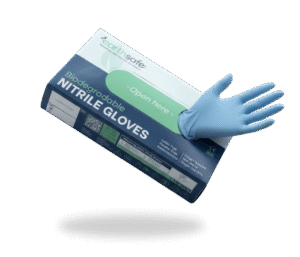
Upgrade your operation confidently! Our FDA-compliant biodegradable nitrile gloves deliver the protection and assurance you need to meet the highest food safety standards, all while providing a simple, positive step toward sustainability. Contact our sales team immediately for verified product certifications and bulk pricing: Call +44 7482 212945 or visit our contact page.