Nitrile gloves are trusted for their reliability, strength, and consistent protection. They are the standard choice across laboratories, hospitals, food industries, and domestic environments. Their role is simple yet vital, forming a barrier between hands and potential contaminants.
But one question often arises: can bacteria actually grow on nitrile gloves?
This topic blends microbiology, hygiene, and environmental awareness. Understanding how bacteria interact with glove materials reveals why glove quality, handling, and disposal matter more than ever.
Understanding Bacterial Growth
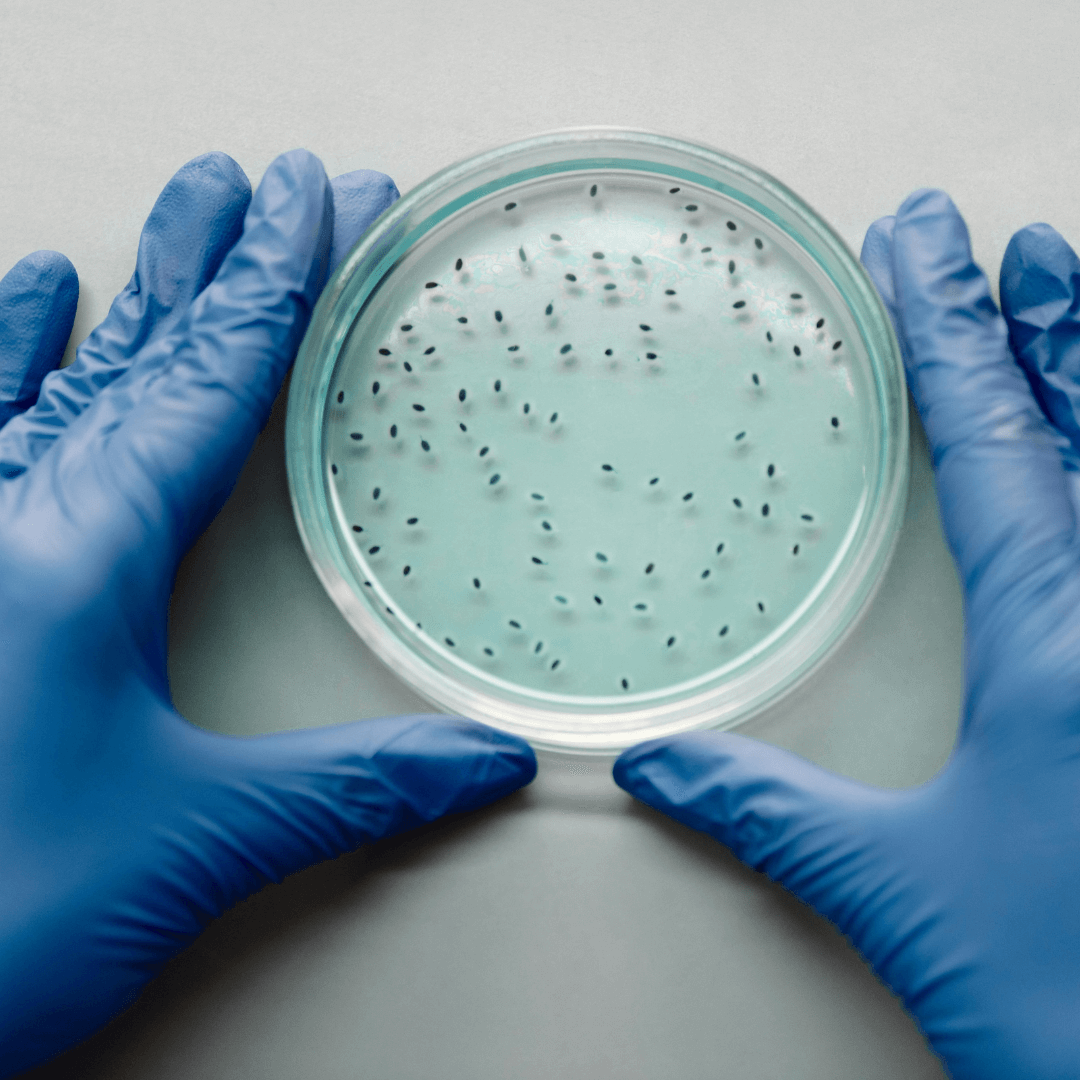
Bacteria exist everywhere. They thrive on surfaces, in the air, in water, and on skin. To multiply, they generally need nutrients, moisture, and a suitable temperature range. Under the right conditions, bacterial colonies can double in minutes.
However, nitrile is not an organic material. It does not supply nutrients or absorb moisture easily. This makes it a poor environment for bacterial proliferation.
Unlike porous fabrics or natural materials, nitrile’s smooth synthetic surface prevents most microorganisms from embedding or feeding.
In essence, nitrile gloves do not support bacterial growth on their own. But this does not mean bacteria cannot be present on them. Contamination can occur through handling, contact with infected surfaces, or airborne particles. The distinction lies between bacteria existing on a surface and actually multiplying there.Crucially, while common pathogens do not multiply, specialized anaerobic bacteria can colonize the polymer surface in specific environmental settings (like a landfill) to start the degradation process. This is the exception that makes biodegradable technology possible.
Why Nitrile Performs Well Against Microbes
The molecular structure of nitrile, known as acrylonitrile butadiene rubber, is engineered for resistance. It creates a dense barrier that blocks fluids, chemicals, and microorganisms. This same structure also limits the ability of bacteria to attach firmly or penetrate.
Unlike latex, which contains natural proteins that can retain moisture and allow slight microbial adherence, nitrile is fully synthetic. This engineered composition contributes to its stability and cleanliness during use.
When manufactured under proper standards, nitrile gloves begin their life with extremely low bioburden levels, meaning there are very few microorganisms present on the surface before packaging.
This baseline cleanliness is essential in medical and industrial environments. It ensures that the gloves serve as a true barrier, not a source of new contamination.
Sources of Bacterial Contamination
Even though bacteria do not grow within nitrile, they can still be transferred onto gloves. The most common routes include:
- Contact with contaminated surfaces – Touching infected instruments, workbenches, or equipment.
- Improper storage – Leaving glove boxes open in dusty or humid environments.
- Extended use – Wearing the same pair for too long in moist conditions.
- Touching skin or clothing – Hands, sleeves, and personal items can all transfer microorganisms.
- Growth from skin (under the glove) – Wearing the same pair for too long creates a warm, moist environment on the skin under the glove. This can cause bacteria naturally present on the skin to multiply rapidly, increasing the risk of contamination when the glove is removed.
In these cases, bacteria may adhere temporarily to the glove surface. However, since the material offers no nutrients, the microbes generally do not multiply. They persist until they are either removed or disposed of with the glove.
This is why disposable gloves must always be discarded after a single use, especially in environments dealing with food, healthcare, or laboratory samples.
Laboratory Studies on Bacteria and Nitrile
Research comparing glove materials consistently shows that nitrile surfaces resist bacterial growth better than many alternatives.
Under controlled testing, nitrile gloves tend to show minimal microbial survival over time compared with vinyl or latex gloves. Most microorganisms die off within hours, especially in dry conditions.
In moisture-rich or organic settings, survival can be slightly longer. Still, the surface properties of nitrile limit bacterial colonization. The absence of porous texture and organic compounds gives bacteria little opportunity to multiply.
This resistance does not remove the need for hygiene. It supports good practice but never replaces it. Even the best gloves lose their protective value if used beyond their intended duration or stored carelessly.
Hygiene Begins at Manufacturing
While bacteria cannot grow easily on nitrile, glove hygiene starts long before the product reaches the user. The cleanliness of the production environment directly affects the quality of the gloves.
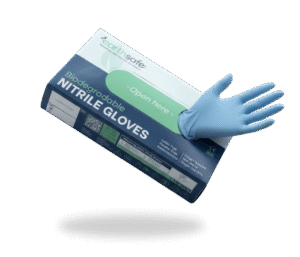
Our biodegradable nitrile gloves are produced in facilities operating under strict hygiene standards. Each batch undergoes stringent quality controls to maintain exceptionally low bioburden levels. This minimizes the presence of microorganisms from the moment the gloves are packed.
Workers follow controlled handling protocols. Air filtration, material screening, and sanitation procedures are maintained around the clock. The result is a glove that provides a clean starting point, crucial for industries where contamination cannot be tolerated.
This level of control extends beyond basic cleanliness. It represents a full commitment to user safety and reliability. Every box leaves the facility ready to perform under the most demanding hygiene expectations.
The Difference Between Clean and Sterile
It is helpful to clarify the terms often used interchangeably.
A clean glove has low microbial presence, suitable for food handling, laboratories, or general use.
A sterile glove is treated to remove all forms of microbial life, intended for surgical or invasive applications.
Both can be made from nitrile. The choice depends on the required environment. Our biodegradable nitrile gloves are clean-grade, designed for professional and food safety use. They meet strict hygiene thresholds and comply with FDA standards for handling sensitive materials.
This balance of cleanliness, safety, and environmental responsibility defines their value. They start clean, perform safely, and end responsibly.
Handling Practices and Bacterial Safety
The best glove still depends on proper handling. Correct donning and disposal prevent secondary contamination. Here are several practices that maintain glove integrity:
- Use gloves with clean, dry hands. Moisture encourages bacterial transfer from skin. This step is vital because sweat trapped inside the glove can cause bacteria already on your hands to proliferate quickly, making the glove removal process risky.
- Avoid touching non-sterile objects once gloves are worn.
- Change gloves between tasks, even short ones, if switching between surfaces or materials.
- Dispose of used gloves properly, avoiding reuse or pocket storage.
- Store boxes in dry, cool areas, away from direct sunlight or dust.
Such simple habits preserve the intended barrier function and minimize microbial risk.
The Question of Biodegradability and Microbial Breakdown
Interestingly, bacteria also play a positive role in glove technology, particularly in how biodegradable nitrile decomposes.
While the glove remains resistant to microbial attack during its service life, biodegradable formulations include additives that invite specific microbes to digest the material once discarded in landfill conditions.
These microorganisms act under anaerobic conditions, consuming the glove polymers over time.
In controlled testing, our biodegradable nitrile gloves have been shown to biodegrade up to 90% within 490 days, a dramatic improvement over traditional nitrile, which can persist for over a century.
Importantly, this breakdown occurs only after disposal. During use and storage, the gloves maintain full durability, chemical resistance, and performance standards. The process activates only when the glove is surrounded by landfill microbes and deprived of oxygen.
This innovation connects hygiene and sustainability without compromise.
Hygiene and Sustainability: A Balanced Approach
Every disposable glove serves a single purpose: to protect both the user and the environment around them from contamination. Reusing gloves risks spreading bacteria, viruses, or chemicals. Therefore, all disposable gloves must be discarded after one use.
This reality creates large volumes of waste worldwide. That is why biodegradable nitrile represents an essential step toward sustainability.
By breaking down faster after disposal, these gloves reduce long-term waste without affecting performance or cleanliness.
Users can maintain high safety standards without the environmental guilt that often accompanies single-use protective gear. It allows responsible practices in both hygiene and ecology, two areas once seen as competing priorities.
Why Regular Nitrile Persists in Landfills
Traditional nitrile gloves remain durable for decades because their synthetic polymers resist microbial degradation. These chains of acrylonitrile and butadiene lack natural enzyme targets. Landfill microorganisms cannot break them down efficiently.
As a result, conventional nitrile accumulates as solid waste. Even incineration, though it reduces volume, consumes significant energy and can generate emissions.
This persistence once seemed an unavoidable trade-off for safety. Biodegradable nitrile technology has changed that expectation, offering a clear path forward for industries and individuals aiming to reduce landfill impact.
The Role of Microbes in Biodegradable Decomposition
When biodegradable nitrile gloves reach a landfill, their additives activate under microbial conditions. Anaerobic bacteria begin digesting the material, producing harmless organic residues and biogases such as methane and carbon dioxide.
Over time, the glove’s structure weakens and returns to its natural components.
This microbial action does not harm the landfill ecosystem; it supports it. The material contributes to controlled degradation instead of indefinite persistence.
Thus, bacteria become partners in sustainability, even though they could not thrive on the gloves during their useful life.
Safety Through Material Integrity
Maintaining resistance to bacteria during use requires consistent material quality. Biodegradable nitrile gloves are engineered to preserve identical mechanical and chemical resistance as standard nitrile while still breaking down after disposal.
The gloves resist punctures, solvents, and oils. They maintain flexibility and tensile strength, allowing comfort during extended wear. These qualities ensure that users face no compromise in protection while choosing an environmentally progressive product.
Durability in use and degradability after disposal may seem conflicting goals. Through careful material engineering, both are achieved simultaneously.
Comparing Surface Interactions
Microscopic studies show that bacterial cells attach more easily to rough, moist, or nutrient-rich surfaces.
Nitrile’s surface remains smooth and nonporous, leaving little opportunity for microbial anchoring. Even when moisture or organic matter is present, bacterial colonies struggle to form stable attachments.
In comparison, natural rubber or vinyl may exhibit microtextures where bacteria can settle more easily. This makes nitrile a preferred option for environments requiring strict hygiene control.
Such structural details, though invisible to the naked eye, form the basis for measurable safety performance.
Cleanroom Production Standards
Our biodegradable nitrile gloves are manufactured under controlled cleanroom conditions, where particulate and microbial contamination are strictly limited.
Air quality, humidity, and surface sanitation are monitored continuously. Each production phase follows documented hygiene protocols, reducing variability and preserving product integrity.
This disciplined environment supports industries like food processing, pharmaceuticals, and biotechnology, where even minimal contamination could affect outcomes.
Every glove produced carries the assurance of a low-bioburden start, giving users confidence in both safety and hygiene.
The Human Element: Handling and Awareness
Technology alone cannot eliminate all microbial risks. Human behavior remains a central factor in glove hygiene.
Touching contaminated surfaces, using mobile devices, or adjusting protective gear with gloved hands can all transfer microorganisms.
Education and consistent protocols make the difference. Training workers to change gloves frequently, wash their hands before and after use, and dispose of gloves correctly helps maintain hygiene across all operational levels.
When users understand why these actions matter, compliance naturally improves. Awareness becomes an everyday habit rather than an obligation.
The Broader Environmental Picture
Disposable gloves represent a fraction of global waste, yet their presence is visible across industries. Medical waste, food handling waste, and laboratory waste all contribute to landfill volume.
Traditional gloves, though safe in use, carry a long environmental legacy. Biodegradable nitrile gloves offer measurable relief. By shortening decomposition timeframes from centuries to a few years, they support cleaner waste management systems and corporate sustainability goals.
For organizations reporting on environmental performance, this improvement is tangible. It represents an immediate, actionable contribution to sustainability targets.
Industry Adoption and Progress
The transition to biodegradable gloves is gaining momentum. Early adopters include healthcare institutions, food manufacturers, and research facilities seeking measurable waste reductions without safety trade-offs.
Manufacturers are also investing in new formulations that balance biodegradability with long shelf life. The goal is reliability in every phase, from storage and use to disposal and breakdown.
As technology advances, these gloves are expected to become a standard option across sectors. Cost efficiency and broader availability will continue driving adoption.
Myths About Bacterial Growth on Gloves
Several misconceptions surround glove hygiene.
Some assume bacteria can multiply directly on nitrile surfaces during use. In reality, growth is rare unless organic residue or moisture is trapped between the glove and skin.
Others believe glove materials alone determine hygiene outcomes. In truth, storage, handling, and user habits play equal roles.
Another myth is that biodegradable nitrile may compromise safety. Laboratory data disproves this. The gloves maintain identical protective properties throughout their intended lifespan, with degradation occurring only after disposal.
Clarifying such misconceptions strengthens trust and encourages informed decision-making.
Proper Disposal Practices
Disposal remains the final stage of glove responsibility. Used gloves should be removed without touching the outer surface, placed in appropriate waste containers, and never reused. For food or healthcare settings, dedicated disposal bins prevent cross-contamination.
Our biodegradable nitrile gloves are compatible with standard landfill processes. No special treatment is required. Their accelerated decomposition occurs naturally, without producing harmful residues or requiring industrial composting systems.
This straightforward disposal process simplifies compliance while supporting sustainability goals.
Looking Toward a Cleaner Future
The relationship between hygiene and environmental care is evolving. Protective equipment, once designed purely for safety, now carries the additional responsibility of environmental performance. Biodegradable nitrile gloves stand as a practical example of progress in both areas.
They protect people, preserve cleanliness, and return to nature more responsibly. Bacteria cannot grow on them during use, but they help bacteria play a constructive role once discarded. This dual purpose defines their modern relevance.
As more organizations align safety and sustainability, these gloves represent a small change with a large cumulative impact.
Putting It All Together
So, can bacteria really grow on nitrile gloves? The short answer is not on the glove material itself. Nitrile is a synthetic polymer that does not provide nutrients or a porous surface for bacterial growth.
However, if organic residues such as food particles or body fluids are present, bacteria can survive and multiply on those contaminants, not on the nitrile itself.
That’s why proper hygiene and single-use disposal remain critical.
Our biodegradable nitrile gloves offer users a clean, low-bioburden starting point, supported by controlled manufacturing hygiene. They deliver all the protection expected from professional-grade nitrile while contributing to a sustainable waste solution after disposal.
Safety and sustainability now move together. Choosing gloves that perform strongly in both respects represents a practical, forward-thinking decision for any organization.
Upgrade your operation confidently! Our FDA-compliant biodegradable nitrile gloves deliver the protection and assurance you need to meet the highest food safety standards, all while providing a simple, positive step toward sustainability. Contact our sales team immediately for verified product certifications and bulk pricing: Call +44 7482 212945 or visit our contact page.