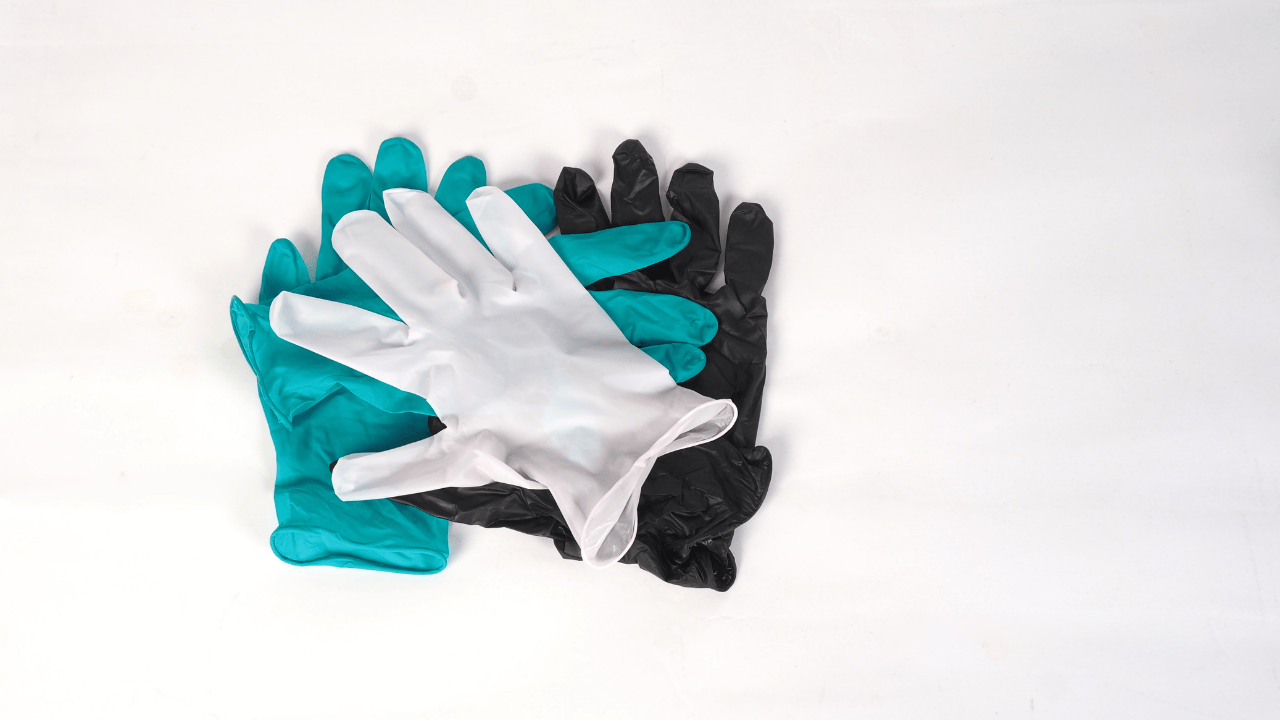
Disposable gloves are used across healthcare, industry, food handling, and daily tasks. Their purpose is simple: provide a protective barrier. But different glove materials carry different environmental impacts. Some break down faster. Some last for decades. Some offer strong safety benefits but leave a heavier footprint.
This article provides a clear ranking of the main glove types used today. Each section explains how the material behaves, how it affects waste systems, and what users should consider before choosing a glove for routine or high-risk tasks. The goal is straightforward: give readers a practical verdict based on environmental performance without ignoring safety requirements.
1. Biodegradable Nitrile – The Winner
Biodegradable nitrile occupies the leading position because it balances safety with a dramatic reduction in long-term waste. Standard nitrile is strong and dependable, but it lingers for decades. Biodegradable nitrile addresses that issue through additives that help the material break down faster when exposed to landfill conditions.
This accelerated breakdown does not compromise performance during use. The gloves still deliver puncture resistance, chemical protection, and durability. That combination gives them the top ranking for users who want effective protection without long-term waste accumulation.
A key point is that these gloves do not start breaking down on the shelf. They remain stable through storage and use. The change begins once they reach an anaerobic landfill environment. Microbial activity speeds the process significantly compared to traditional nitrile.
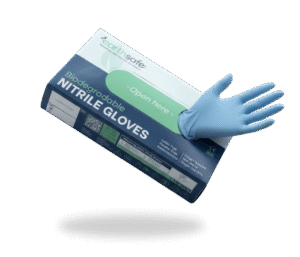
Our Earth Safe BDG nitrile gloves, for example, reach up to 90% degradation in 490 days under typical landfill conditions. Temperature, moisture, and microbial levels influence the pace, but the reduction in long-term persistence is substantial. This shift helps address one of the biggest drawbacks of conventional nitrile.
Biodegradable nitrile also works within standard disposal streams. There is no need for special bins, complex sorting, or separate handling steps. That practicality makes adoption far easier for organisations looking to reduce waste output without altering operations.
Recycling is still possible in facilities designed for nitrile processing. However, biodegradable nitrile’s strength lies mainly in reducing landfill buildup. In regions where glove recycling is limited, this material provides a clear advantage.
By uniting strong protection with shorter environmental stays, biodegradable nitrile earns the number-one position in any ranking focused on sustainability, safety, and usability.
2. Natural Latex – Eco-Friendlier Material, Higher Allergy Risks
Natural latex holds second place in this review. The material originates from rubber trees, which gives it an environmental advantage. It breaks down faster than synthetic options and does not persist as long in landfill settings.
For biodegradable breakdown, natural latex performs well. It decomposes in a shorter timeframe when exposed to heat, sunlight, and microbial activity. This makes it appealing to environmentally conscious sectors that still require good elasticity and barrier protection.
However, latex allergies remain a significant limitation. Hospitals, schools, laboratories, and food-handling sites have reduced or eliminated latex use because reactions can be severe. Even powdered latex gloves can cause issues through airborne particles. These concerns have prompted regulations and institutional bans in many regions.
From a safety perspective, latex offers excellent stretch, strong tactile feedback, and dependable barrier performance. But allergy management often outweighs these benefits. Organisations choose more neutral materials to protect both staff and visitors from possible reactions.
If allergies were not a factor, latex might take the top spot in environmental performance. But the widespread need to avoid allergic responses places it firmly in second place. It is an eco-friendlier option than many alternatives, yet less practical for broad adoption.
3. Standard Nitrile – Strong, Safe, but Slow to Break Down
Standard nitrile remains one of the most widely used glove materials worldwide. Its reliability, chemical resistance, and puncture strength make it a preferred option across healthcare, manufacturing, diagnostics, automotive work, food handling, and emergency response.
From a performance standpoint, it fits a large range of tasks. Its popularity grew significantly after the shift away from latex due to allergy concerns. For many users, nitrile is the safest and most reliable non-latex option.
However, its environmental impact is its weakest point. Standard nitrile does not break down quickly. It can remain in landfill sites for decades and adds considerable volume to waste streams. For organisations that use thousands of gloves per day, this accumulation is substantial.
Recycling exists, but is not widely accessible. Most municipal systems do not accept nitrile due to contamination concerns. Specialist programs can process nitrile through cleaning, shredding, and blending with other polymers, but these services require dedicated partnerships and are more commonly used by large institutions.
Incineration is common, especially for healthcare waste, where safety regulations require high-temperature treatment. Modern facilities capture emissions and convert waste into energy, but this method still consumes resources.
Standard nitrile earns third place because it supports strong safety practices, but it cannot compete with biodegradable nitrile or natural latex in environmental terms. It remains a reliable choice when safety requirements are high, but more sustainable alternatives should replace it whenever conditions allow.
4. Vinyl – Low Cost, Low Protection, High Environmental Burden
Vinyl sits at the bottom of this ranking. Its popularity comes primarily from low cost. Many organisations choose vinyl for short tasks that do not require strong resistance or durability. However, low upfront cost does not reflect its broader impact.
Vinyl tears more easily than nitrile or latex. It provides weaker protection and is unsuitable for tasks involving chemicals, infection control, or extended wear. In many settings, workers use more vinyl gloves simply because they tear faster, which multiplies waste output.
From an environmental standpoint, vinyl performs poorly. The material contains PVC, which is resource-intensive to produce and slow to break down. When disposed of in general waste, it can persist for very long periods. Vinyl is also rarely accepted in recycling programs, even specialist ones, due to its composition.
Beyond disposal concerns, vinyl does not deliver the level of protection needed in many industries. For users prioritising environmental responsibility, vinyl’s drawbacks outweigh its low purchase price.
With its limited performance and heavy footprint, vinyl ranks fourth and remains the least sustainable choice in this comparison.
Practical Considerations for Organisations and Individuals
Choosing the most sustainable glove extends beyond material characteristics. Users should consider context, waste infrastructure, safety requirements, and task frequency. The sections below outline some practical guidance.
Waste Volume Management
Large organisations often generate high glove waste volumes. Even small operational changes can reduce environmental impact.
Examples include:
• Storing gloves properly to avoid damage before use.
• Training staff to avoid unnecessary changes.
• Selecting biodegradable nitrile for general tasks where chemical exposure is minimal.
Recycling Prospects
Recycling for nitrile, whether standard or biodegradable, requires dedicated systems. Hospitals, laboratories, and manufacturing sites benefit most from these programs because they generate predictable waste streams. Households generally cannot access these channels, so biodegradable nitrile is a practical option where recycling is unavailable.
Contamination Levels
Gloves used with chemicals, biological materials, or hazardous waste must follow regulated disposal pathways. Biodegradable nitrile still fits within these systems and offers long-term environmental advantages once incineration or landfill steps are complete.
Cost Considerations
Vinyl appears cheaper at first glance, but high usage rates often negate savings. Biodegradable nitrile delivers cleaner disposal advantages without significant performance trade-offs. Natural latex remains cost-effective but may not be suitable for allergy-sensitive environments.
Long-Term Sustainability Planning
For organisations adopting sustainability frameworks, material selection matters. Gloves are a recurring supply item, and switching to a more responsible material creates measurable waste reduction over time. Biodegradable nitrile supports gradual improvements without restructuring operations.
The Final Verdict
The environmental ranking is clear:
- Biodegradable Nitrile – Best overall choice. Strong protection with significantly reduced landfill impact.
- Natural Latex – Breaks down well, but is restricted by allergy concerns.
- Standard Nitrile – Safe and reliable but slow to degrade.
- Vinyl – Low protection and heavy environmental footprint.
Biodegradable nitrile stands out because it supports everyday safety while addressing one of the biggest weaknesses of disposable gloves: long-term persistence in landfill environments. It is the most balanced option for organisations and individuals aiming to reduce waste without changing their workflow.
Natural latex would rank higher if allergies were not a widespread concern. Standard nitrile remains indispensable in many industries but struggles with environmental performance. Vinyl offers minimal advantages and performs poorly in waste systems.
Users who want practical, responsible choices should prioritise materials that support both safety and waste reduction. Biodegradable nitrile provides that pathway and sets a cleaner direction for future glove use.
Upgrade your operation confidently! Our FDA-compliant biodegradable nitrile gloves deliver the protection and assurance you need to meet the highest food safety standards, all while providing a simple, positive step toward sustainability. Contact our sales team immediately for verified product certifications and bulk pricing: Call +44 7482 212945 or visit our contact page.