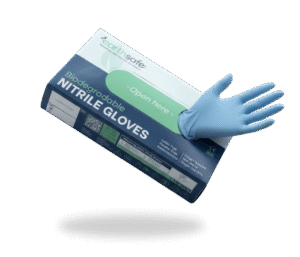

Biodegradable gloves are gaining attention as industries and individuals look for safer and more responsible ways to manage waste. They serve the same purpose as conventional gloves, protecting hands from contaminants and chemicals, but have the added benefit of breaking down faster after disposal. This guide explains what makes gloves biodegradable, their environmental advantages, and how to dispose of them responsibly.
Understanding Biodegradable Gloves
Biodegradable gloves are made using materials designed to decompose through microbial activity. In most cases, these gloves are based on nitrile or other synthetic rubbers that have been modified with organic additives. These additives attract microbes, which consume the material and accelerate decomposition.
The goal is to reduce the long-term impact of glove waste in landfills. Traditional nitrile gloves can remain intact for decades. Biodegradable versions, however, can begin to break down within a few years, sometimes much faster depending on landfill conditions.
Manufacturers continue to refine these materials, aiming to maintain durability and performance while improving environmental outcomes. This balance between protection and biodegradability is what makes such gloves an effective and responsible choice for modern workplaces.
Materials Used in Biodegradable Gloves
Standard nitrile is made from acrylonitrile butadiene rubber, a synthetic material that resists microbial activity. To make nitrile biodegradable, small quantities of biodegradable additives are integrated into the compound. These additives do not weaken the glove during use but allow natural organisms to act once the glove reaches landfill conditions.
Some gloves may also use natural rubber or hybrid materials. These options vary in flexibility, strength, and breakdown rate. The manufacturing process remains focused on maintaining safety, chemical resistance, and comfort.
The technology continues to evolve, with new formulations demonstrating faster decomposition without affecting performance.
How Biodegradation Works
Biodegradation is the natural process of breaking down materials into simpler substances. Microbes such as bacteria and fungi feed on the glove material, converting it into biomass, water, and gases like carbon dioxide or methane.
In biodegradable nitrile, this process begins when the gloves are buried under specific conditions, low oxygen, consistent moisture, and microbial presence. Landfills typically provide these settings.
Timeframes can vary. Some products biodegrade up to 90% within 490 days, while others may take several years depending on the environment. The overall reduction in waste volume and persistence makes biodegradable gloves an appealing alternative to conventional options.
Comparing Standard and Biodegradable Gloves
Standard nitrile gloves are known for their resistance and strength. They protect against chemicals, punctures, and biological hazards. However, their long degradation time contributes to landfill buildup.
Biodegradable nitrile gloves perform similarly in use. They maintain tensile strength, resistance to oils, and reliable barrier protection. The key difference lies in post-use behavior. Once discarded, biodegradable nitrile interacts with microbes that help reduce the material into natural elements.
The physical performance during wear remains the same. This means users can switch to biodegradable versions without changing safety procedures or compromising reliability.
Benefits of Biodegradable Gloves
- Reduced Landfill Waste
Biodegradable gloves help minimize the accumulation of long-lasting synthetic waste. Their faster decomposition means less environmental burden. - Comparable Performance
Despite their eco-friendly composition, these gloves retain the strength and durability of standard nitrile. Users experience identical protection levels. - Compliance and Reputation
Using biodegradable gloves supports sustainability goals and demonstrates environmental responsibility. Many businesses now include such measures in their operational reporting. - Positive Environmental Impact
A shorter breakdown cycle decreases the persistence of synthetic materials, supporting landfill management and broader sustainability targets.
Disposal Practices
The most effective disposal route for biodegradable gloves is landfill, where the right balance of microbes, moisture, and temperature exists. These conditions trigger the breakdown process.
Recycling remains limited because gloves are often contaminated after use. Sorting and cleaning large volumes require specialized infrastructure. Some niche recycling programs accept clean gloves from controlled environments, but these are still uncommon.
Incineration, while reducing volume, consumes energy and can release emissions. Therefore, biodegradable gloves provide a more practical route for reducing waste without adding additional processing burdens.
Industrial and Commercial Use
Many sectors, healthcare, food processing, manufacturing, and laboratories, depend heavily on disposable gloves. Biodegradable nitrile options now make it possible to maintain high hygiene and safety standards while reducing environmental footprint.
Businesses adopting these gloves often find the transition seamless. There is no change in fit, comfort, or performance, only a positive shift in waste outcomes. For high-volume users, switching to biodegradable gloves can significantly decrease total landfill contributions over time.
Sustainability policies increasingly highlight such changes as measurable achievements. Including biodegradable PPE in purchasing frameworks supports environmental goals without affecting productivity.
Environmental Considerations
While biodegradable gloves mark a major improvement, they do not disappear instantly. The process still requires suitable landfill conditions and time. Yet even partial decomposition represents a major reduction compared to conventional gloves that remain intact for centuries.
It’s also vital that biodegradable gloves are not mixed with hazardous or medical waste. Those materials often require specialized disposal methods. Clean, used gloves from non-hazardous settings are ideal candidates for landfill biodegradation.
Manufacturers are continuously improving formulas to promote quicker and more complete breakdowns. As research progresses, biodegradation rates are expected to shorten further.
Responsible Procurement
Choosing biodegradable gloves aligns with broader sustainability strategies. Procurement teams can assess suppliers based on biodegradation certification, performance standards, and compliance documentation. Verified test data from recognized laboratories confirm decomposition rates under controlled landfill simulations.
Switching to biodegradable gloves demonstrates a long-term commitment to environmental stewardship. This step, combined with proper waste management practices, creates tangible benefits for both business operations and ecological responsibility.
Organizations can also engage with glove recycling programs where feasible or collaborate with manufacturers on take-back schemes. These combined actions strengthen waste reduction outcomes and contribute to sustainable operations.
The Future of Biodegradable Gloves
The market for biodegradable gloves continues to expand. As costs fall and awareness grows, adoption will likely accelerate across industries. Material science innovations aim to shorten degradation times while maintaining the barrier performance expected in critical environments.
Future developments may include formulations that decompose under broader conditions, not just landfill environments. The combination of biodegradability and durability will remain a guiding focus.
By making environmentally conscious choices today, organizations contribute to a cleaner and more efficient waste cycle. The growing preference for biodegradable gloves signals an encouraging shift in how industries balance safety and sustainability.
Choosing the Right Biodegradable Glove
When selecting biodegradable gloves, consider the following points:
- Performance Requirements: Match glove strength, elasticity, and chemical resistance to your specific application.
- Certifications: Check for verified biodegradation results and compliance with international safety standards.
- Storage and Shelf Life: Like standard nitrile, biodegradable versions should be stored in cool, dry conditions to preserve quality.
- Supplier Transparency: Reliable manufacturers provide clear documentation and traceability for their biodegradable products.
With these factors in mind, businesses and individuals can make informed decisions that balance protection, efficiency, and environmental care.
Biodegradable gloves represent meaningful progress in reducing persistent waste without compromising on performance. They provide the same level of hand protection that users expect, while addressing the growing concern over landfill accumulation.
As sustainability continues to shape business practices, biodegradable nitrile gloves stand as a practical and credible alternative. Their adoption supports cleaner waste cycles, responsible manufacturing, and a more sustainable future for protective equipment.
Upgrade your operation confidently! Our FDA-compliant biodegradable nitrile gloves deliver the protection and assurance you need to meet the highest food safety standards, all while providing a simple, positive step toward sustainability. Contact our sales team immediately for verified product certifications and bulk pricing: Call +44 7482 212945 or visit our contact page.