Nitrile gloves are used in large volumes across healthcare, food handling, laboratories, and manufacturing. Their performance profile explains the demand. They resist punctures, tolerate oils and chemicals, and provide consistent barrier protection. The same qualities that make them dependable during use also shape what happens after disposal. One question comes up repeatedly: how long do nitrile gloves take to decompose?
The answer depends on material composition, disposal conditions, andwhether the gloves are standard or modified for faster breakdown. Timeframes range from decades to several centuries. Placing those numbers next to other everyday materials helps explain why nitrile waste is a concern.
This article focuses on decomposition timelines, compares nitrile to plastics such as nylon and carrier bags, and outlines how newer glove designs change the picture.
What Decomposition Means in Practice
Decomposition refers to the gradual breakdown of materials through physical, chemical, and biological processes. Sunlight, moisture, heat, oxygen, and microbial activity all influence the rate. Landfills often slow these processes. Waste is compacted. Oxygen is limited. Light rarely reaches buried materials.
A glove that might degrade faster in open conditions can remain intact underground for a very long time. That distinction matters when discussing disposal timelines.
The Material Behind Nitrile Gloves
Nitrile gloves are made from synthetic rubber, specifically nitrile butadiene rubber. This polymer structure is engineered for stability. It resists tearing and chemical reactions. It does not rely on natural proteins, unlike latex.
That stability explains its persistence. Microorganisms that break down organic matter do not easily digest synthetic polymers. Without modification, nitrile remains largely unchanged for extended periods.
Standard Nitrile Gloves: Expected Timeframes
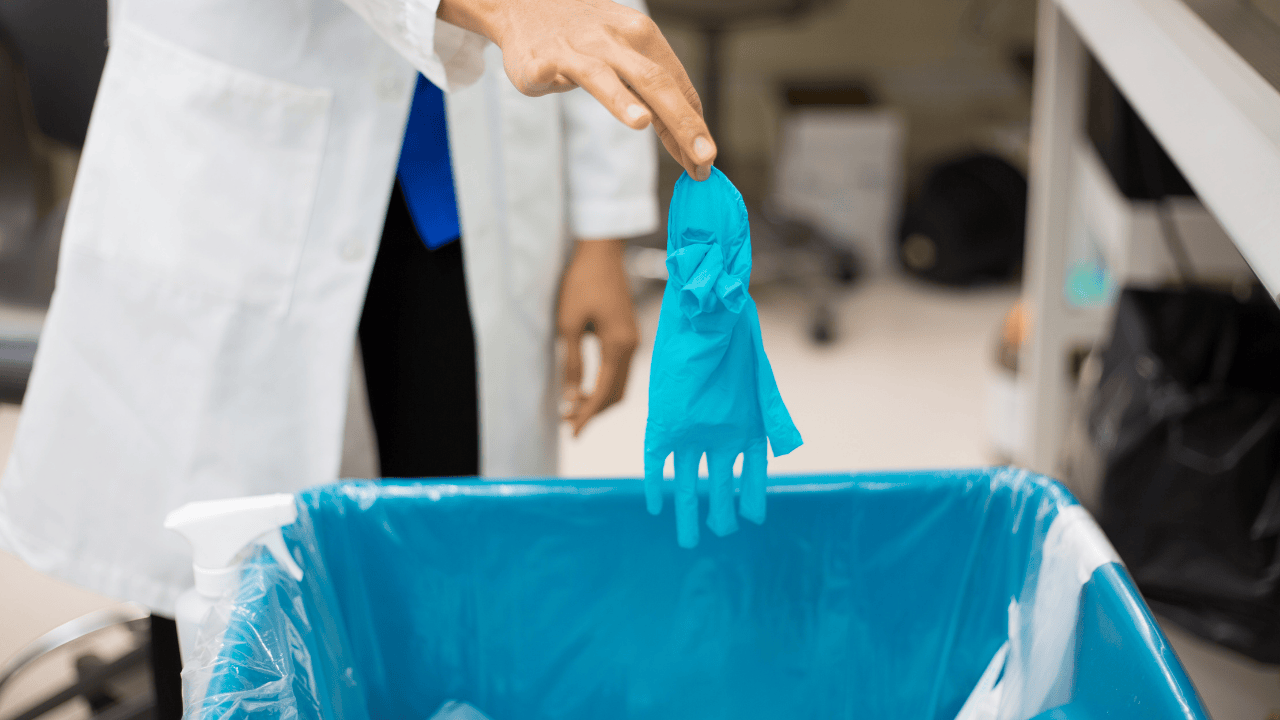
Standard nitrile gloves are not biodegradable. In landfill conditions, estimates often range from 100 to 500 years before significant breakdown occurs. Some studies suggest fragments may persist even longer.
This does not mean the glove looks the same for centuries. Over time, it can become brittle and fragment into smaller pieces. The polymer chains remain. Complete mineralisation into basic compounds takes far longer.
In practical terms, a nitrile glove discarded today is likely to outlast several human generations.
Comparison With Plastic Bags
Plastic carrier bags are commonly used as a reference point. Most are made from polyethylene. In landfills, plastic bags are estimated to take 20 to 1,000 years to break down, depending on thickness and conditions.
Thin bags exposed to sunlight can degrade faster due to ultraviolet radiation. Buried bags behave differently. Many remain intact for hundreds of years.
Standard nitrile gloves sit within the same general range as plastic bags, though often toward the higher end. Their thicker structure and chemical resistance slow the process.
Comparison With Nylon
Nylon is another synthetic polymer found in textiles and industrial products. Fishing lines, ropes, and some fabrics use nylon due to its strength.
Nylon products can take 30 to 40 years to decompose in open environments. In landfills, the timeline stretches much longer. Estimates often exceed 100 years.
Nitrile gloves typically decompose more slowly than nylon fabrics. The rubber formulation resists microbial action more effectively than many nylon blends.
Latex Gloves as a Contrast
Latex gloves are made from natural rubber derived from rubber trees. In the right conditions, latex can biodegrade within one to five years. Moisture, heat, and microbial presence accelerate the process.
That difference is significant. It explains why latex is often described as more environmentally friendly from a breakdown perspective, despite allergy concerns that limit its use.
Nitrile trades faster degradation for performance consistency and broader user compatibility.
Vinyl Gloves and Decomposition
Vinyl gloves are made from polyvinyl chloride. PVC is known for its durability and resistance to breakdown. Estimates suggest vinyl products can take hundreds of years to decompose.
In many cases, vinyl persists longer than nitrile. Additives used to soften PVC can leach out, but the base polymer remains.
From a timeline standpoint, vinyl ranks among the slowest glove materials to degrade.
Why Landfills Extend Decomposition
Landfills are designed to isolate waste, not to promote breakdown. Layers of compacted material limit airflow. Moisture levels vary. Temperatures remain relatively stable.
These conditions reduce microbial activity. Items that might degrade faster in composting environments remain preserved.
A nitrile glove buried in a landfill is shielded from sunlight and oxygen. As a result, degradation slows to a crawl.
Incineration and Timeline Elimination
Incineration removes the long timeline entirely. Gloves burned at high temperatures break down immediately into ash and gases. Modern facilities capture emissions and often generate energy from the process.
From a decomposition standpoint, incineration avoids centuries of persistence. It carries energy costs but reduces long-term material accumulation.
Healthcare and hazardous waste streams commonly rely on this method.
Biodegradable Nitrile Gloves: A Different Timeline
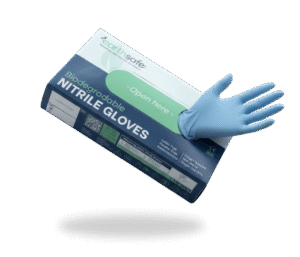
Biodegradable nitrile gloves alter the standard picture. These products include additives that attract microbes once disposed of in landfill conditions. The microbes consume the polymer chains, accelerating breakdown.
Under typical landfill conditions, biodegradable nitrile gloves can reduce up to 90 percent of their mass in about 490 days. That equates to roughly 1.3 years.
This places them closer to natural rubber in terms of timeline, though still dependent on moisture, temperature, and microbial presence.
The gloves remain stable during storage and use. The accelerated breakdown begins after disposal.
Comparing Timelines Side by Side
Placing materials next to each other clarifies the differences:
- Standard nitrile gloves: 100 to 500 years
- Plastic carrier bags: 20 to 1,000 years
- Nylon products: 30 to 100+ years
- Vinyl gloves: Several hundred years
- Latex gloves: 1 to 5 years
- Biodegradable nitrile gloves: Around 1 to 2 years under landfill conditions
These ranges reflect estimates rather than exact dates. Real-world conditions vary. The contrast remains clear.
Fragmentation Versus True Breakdown
A common misconception involves fragmentation. Materials may break into smaller pieces without fully decomposing. Microplastics form through this process.
Standard nitrile gloves can fragment over time. The pieces persist. True decomposition requires conversion into basic compounds such as water, carbon dioxide, and biomass.
Biodegradable formulations aim for that outcome rather than simple fragmentation.
Environmental Context Without Alarm
Long decomposition timelines do not imply immediate harm. Landfills are controlled environments. Risks depend on waste management practices, volume, and local conditions.
The focus remains on responsible handling. Understanding timelines helps organisations choose suitable disposal routes and materials.
The discussion benefits from measured analysis rather than dramatic framing.
Why Timelines Matter for Organisations
For high-volume users, timelines translate into long-term waste accumulation. Hospitals, food processors, and manufacturers discard thousands of gloves daily.
Choosing materials that persist for centuries affects sustainability reporting and waste strategies. Shorter decomposition timelines support reduction goals without changing workflows.
That consideration influences procurement decisions.
The Role of Product Design
Material science continues to refine glove design. Additives that support microbial action without affecting performance represent one direction. Improved recycling compatibility is another.
Design choices influence the end-of-life phase more than user behaviour alone.
Manufacturers now factor decomposition into product development alongside protection standards.
Household Use and Perspective
Household users contribute smaller volumes. A box of gloves used for cleaning or food prep adds marginally to landfill mass.
Even so, awareness shapes purchasing habits. Users comparing a glove that lasts centuries against one that breaks down in a few years often adjust their choice.
The timeline provides context, not pressure.
Recycling and Its Effect on Timelines
Recycling changes the equation. Gloves diverted into recycling streams are processed into new products. The original glove no longer exists as waste.
Access remains limited. Contamination complicates collection. Where available, recycling removes the need to consider decomposition time at all.
That option suits large organisations more than households.
Looking Forward
Decomposition timelines are not static. As materials change, so do outcomes. Biodegradable nitrile gloves represent a shift rather than a final solution.
Infrastructure, legislation, and procurement policies shape adoption rates. Clear data supports informed decisions.
Understanding how long nitrile gloves take to decompose provides a practical reference point rather than an abstract statistic.
Standard nitrile gloves persist for decades or centuries. Plastic bags and vinyl gloves behave similarly. Nylon degrades somewhat faster. Latex breaks down within a few years. Biodegradable nitrile gloves reduce mass dramatically in roughly 490 days under landfill conditions.
These comparisons frame the discussion without exaggeration. Timelines vary, but relative differences remain consistent.
Material choice affects long-term waste profiles. That fact drives current changes in glove manufacturing and procurement.
Upgrade your operation confidently! Our FDA-compliant biodegradable nitrile gloves deliver the protection and assurance you need to meet the highest food safety standards, all while providing a simple, positive step toward sustainability. Contact our sales team immediately for verified product certifications and bulk pricing: Call +44 7482 212945 or visit our contact page.