
Packaging claims have become more prominent as sustainability expectations rise. Words such as “degradable” and “biodegradable” appear frequently on gloves, packaging, and disposable products. They look similar. They sound similar. Yet their meanings, regulatory weight, and real-world outcomes differ in important ways. Understanding these differences is necessary for procurement teams, compliance officers, and sustainability managers who rely on accurate claims rather than surface-level language.
Why Terminology Matters
Environmental claims influence purchasing decisions. They also shape waste management strategies and reporting. When terms are used loosely, confusion follows. A glove marked “degradable” may not behave the same way as one labeled “biodegradable,” even if both appear environmentally positive.
Regulators, waste handlers, and buyers evaluate products differently based on these words. The distinction affects disposal routes, compliance risk, and long-term environmental outcomes.
What “Degradable” Actually Means
“Degradable” describes a material that breaks down into smaller pieces over time. The process can occur through heat, light, oxygen exposure, or mechanical stress. It does not specify what those fragments become.
In many cases, degradation results in microplastics. The material fragments remain synthetic. They persist in soil or water. The original product is no longer visible, but it has not returned to natural elements.
There is no universal requirement that degradable products fully assimilate into the environment. Timeframes are rarely defined. Conditions are often unspecified. As a result, the claim is broad and open-ended.
From a regulatory standpoint, “degradable” is often considered a descriptive term rather than a verified environmental outcome. This allows wide use across packaging and PPE markets.
What “Biodegradable” Is Intended to Signal
“Biodegradable” refers to breakdown through biological activity. Microorganisms consume the material and convert it into simpler substances such as water, carbon dioxide, and biomass. The process depends on environmental conditions, including moisture, temperature, and microbial presence.
Unlike degradable claims, biodegradable labeling is commonly tied to testing standards. These standards define conditions, measurement methods, and expected breakdown rates. Results are quantified rather than implied.
That distinction matters. A biodegradable glove is designed with an end-of-life pathway in mind. A degradable glove may only change form.
Standards and Testing Expectations
Biodegradable claims are often linked to recognised test methods. These may involve landfill simulation, soil burial, or controlled composting environments. The outcome is measured over a defined period.
Degradable products often lack this level of validation. Testing may focus on physical breakdown rather than biological conversion. The absence of harmonised benchmarks allows inconsistent use of the term across industries.
For buyers, this difference affects audit readiness. Documentation supporting biodegradability usually includes laboratory data. Degradable claims may rely on general material behaviour instead.
The Role of Additives
Some products achieve degradability through additives. These compounds accelerate fragmentation by weakening polymer chains. The product breaks apart faster, but the base material remains synthetic.
Biodegradable designs often use different chemistry. The polymer structure allows microbes to interact with the material directly. Additives may still be used, but their function supports biological consumption rather than fragmentation alone.
Understanding this distinction helps buyers assess whether a product aligns with sustainability goals or simply alters its disposal profile.
Labeling Gaps and Commercial Pressure
The market rewards environmentally positive language. This creates pressure to adopt labels that suggest improvement, even when outcomes are modest. Without strict enforcement, terms can drift from their technical meaning.
“Degradable” is attractive because it signals change without committing to a defined result. “Biodegradable” carries higher scrutiny but also stronger credibility when supported correctly.
For organisations subject to reporting frameworks or public commitments, these nuances carry operational risk. Claims must align with evidence.
Disposal Outcomes in Practice
Disposal conditions shape performance. A biodegradable glove may show limited breakdown in dry, inactive environments. The same glove can perform very differently in an active landfill setting.
Degradable products also vary widely. Some fragment quickly under UV exposure. Others change little in dark disposal environments. The label alone does not guarantee behaviour.
This reinforces the need to assess both the product design and the disposal route. Labels should not be interpreted in isolation.
Regulatory Direction
Authorities are paying closer attention to environmental claims. In several regions, guidance now discourages vague degradation language without context. Some frameworks require time-bound, condition-specific statements.
Biodegradable claims are increasingly expected to reference recognised standards. Unsupported assertions are more likely to attract scrutiny.
This shift places responsibility on manufacturers to substantiate labels and on buyers to request documentation.
What Buyers Should Look For
Procurement teams should ask clear questions. What conditions were used for testing? What percentage of material breaks down, and over what period? Which standard was applied?
For degradable products, clarification is essential. Does degradation mean fragmentation only, or biological conversion? Are microplastics produced?
These questions support informed decisions and reduce reliance on marketing language alone.
Use Context Matters
No label operates in a vacuum. A glove used in food handling faces different disposal realities than one used in industrial cleaning. Contamination levels influence waste routing, regardless of material claims.
Biodegradable products do not bypass waste regulations. They still require appropriate handling. The benefit lies in their behaviour after disposal, not exemption from protocols.
Understanding this prevents misplaced expectations.
Transparency as a Differentiator
Clear documentation separates credible products from ambiguous ones. Manufacturers that publish test data and define conditions provide practical value to buyers.
This transparency supports compliance, reporting, and internal sustainability goals. It also reduces confusion at the point of disposal.
As awareness grows, vague claims lose effectiveness.
Practical Takeaway
Language around materials will continue to tighten. As standards evolve, the gap between degradable and biodegradable claims is likely to narrow in definition but widen in accountability.
Products designed with biological breakdown in mind are better positioned for future scrutiny. Fragmentation-based claims may face increasing challenges.
For buyers, this means due diligence becomes part of routine purchasing rather than an optional review.
“Degradable” and “biodegradable” are not interchangeable. One describes physical change. The other describes biological conversion. The difference affects environmental outcomes, compliance confidence, and credibility.
Labels should prompt questions, not assumptions. Evidence matters more than wording.
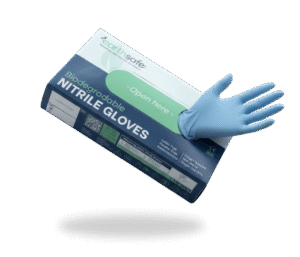
Upgrade your operation confidently! Our FDA-compliant biodegradable nitrile gloves deliver the protection and assurance you need to meet the highest food safety standards, all while providing a simple, positive step toward sustainability. Contact our sales team immediately for verified product certifications and bulk pricing: Call +44 7482 212945 or visit our contact page.