Biodegradable gloves are increasingly visible across workplaces and homes. Their presence reflects growing concern about plastic waste and long-term disposal. Yet a practical question remains unresolved for many users. Can biodegradable gloves go in general waste, or do they require special handling?
The answer is less straightforward than product labels sometimes suggest. Disposal depends on material composition, contamination, and the waste systems available. This article explains how biodegradable gloves behave after disposal, where general waste fits into the picture, and what responsible disposal looks like in real conditions.
What “Biodegradable” Means in Gloves
Biodegradable gloves are usually made from nitrile that has been modified with an organic additive. This additive encourages microbial activity once the gloves enter landfill environments. Over time, microbes break the polymer chains into smaller components, allowing the material to degrade faster than standard nitrile.
This does not mean the gloves dissolve quickly after disposal. Degradation occurs under specific conditions. Heat, moisture, oxygen levels, and microbial presence all play a role. Without these factors, breakdown slows considerably.
Biodegradable does not equal compostable. These gloves are not designed for garden compost or food waste bins. They require controlled landfill conditions to perform as intended.
General Waste Defined
General waste refers to refuse that is neither recyclable nor hazardous. It includes mixed materials that cannot be easily separated. In most regions, general waste is sent to landfill or energy-from-waste facilities.
For disposable gloves, general waste remains the most common destination. This applies even to many gloves marketed as environmentally improved products. The presence of food residues, oils, or chemicals often removes recycling options.
Understanding how biodegradable gloves behave within general waste streams helps clarify whether this route is acceptable.
Can Biodegradable Gloves Go in General Waste?
In most cases, yes. Biodegradable gloves are designed to be disposed of through general waste. This route allows them to reach landfill conditions where degradation can occur.
Placing them in recycling bins is usually incorrect. Most recycling systems cannot process gloves, regardless of material claims. Contamination risks also exclude them from standard recycling streams.
General waste disposal aligns with how biodegradable nitrile gloves are tested and certified. The landfill environment provides the setting needed for microbial breakdown.
That said, disposal suitability still depends on how the gloves were used.
Usage Context Matters
A glove worn for light household cleaning differs from one used in healthcare or industrial work. Contamination affects disposal decisions.
Gloves exposed to biological material, chemicals, or solvents must follow regulated waste routes. Biodegradability does not override safety protocols. In healthcare settings, biodegradable gloves still enter clinical waste streams.
For food handling or domestic tasks, general waste disposal is usually acceptable. These gloves pose minimal risk and can degrade under landfill conditions.
Assessing use context before disposal avoids improper handling and regulatory breaches.
Landfill Conditions and Degradation
Landfills are complex systems. They vary in oxygen availability, moisture, and temperature. Biodegradable nitrile gloves are typically tested under active landfill conditions where microbes are present.
In these settings, gloves can biodegrade substantially faster than conventional nitrile. Studies often measure biodegradation through carbon conversion over a defined period. Results depend on environmental variables.
If gloves enter inert landfill cells with limited microbial activity, degradation slows. Even so, biodegradable nitrile still performs better over time than standard alternatives.
General waste disposal remains compatible with how these products are engineered to break down.
Energy-from-Waste Facilities
In some regions, general waste is diverted to incineration rather than landfill. Energy-from-waste plants burn refuse at high temperatures to generate power.
If biodegradable gloves are incinerated, biodegradation does not occur. The material converts to energy and ash instead. This outcome is not harmful, but it differs from landfill breakdown.
Manufacturers usually acknowledge this limitation. Biodegradability benefits apply only when landfill conditions are present. Incineration remains a valid disposal route from a regulatory perspective.
Labelling and Consumer Confusion
Product packaging often uses simplified language. Terms like “eco-friendly” or “biodegradable” can imply broad disposal freedom. This leads to confusion.
Biodegradable gloves should not be placed in compost bins. They should not be flushed. They should not enter household recycling.
Clear disposal guidance helps users make correct choices. When instructions specify general waste, that guidance reflects how the product was tested.
Consumers benefit from reading disposal notes carefully rather than relying on assumptions.
Recycling and Biodegradable Gloves
Some users assume biodegradability replaces recycling. It does not.
Biodegradable nitrile gloves are not widely recyclable. The additives that support microbial breakdown do not simplify mechanical recycling. In fact, they can complicate processing when mixed with standard nitrile.
Specialist recycling programs may accept biodegradable gloves, but these schemes remain limited. They usually serve large organisations rather than households.
Until infrastructure expands, general waste remains the practical route for most users.
Workplace Disposal Policies
Businesses using biodegradable gloves often ask whether existing waste systems need revision. In many cases, they do not.
For non-hazardous use, gloves can enter standard waste bins. Signage should clarify that gloves do not belong in recycling containers. This prevents contamination of recyclable materials.
In regulated environments, disposal rules remain unchanged. Biodegradable gloves still follow clinical or hazardous waste procedures where applicable.
Consistency in waste handling avoids confusion among staff and contractors.
Environmental Impact Considerations
Placing biodegradable gloves in general waste may appear counterintuitive. However, this route supports their intended end-of-life behaviour.
Landfill biodegradation reduces long-term plastic persistence. While it does not eliminate environmental impact, it represents an improvement over conventional nitrile disposal.
Reduction strategies still matter. Responsible use, appropriate glove selection, and avoiding unnecessary changes all contribute to lower waste volumes.
Biodegradable gloves address one part of the waste challenge, not the whole.
Household Use Scenarios
At home, biodegradable gloves are often used for cleaning, food preparation, or gardening. After use, disposal choices are limited.
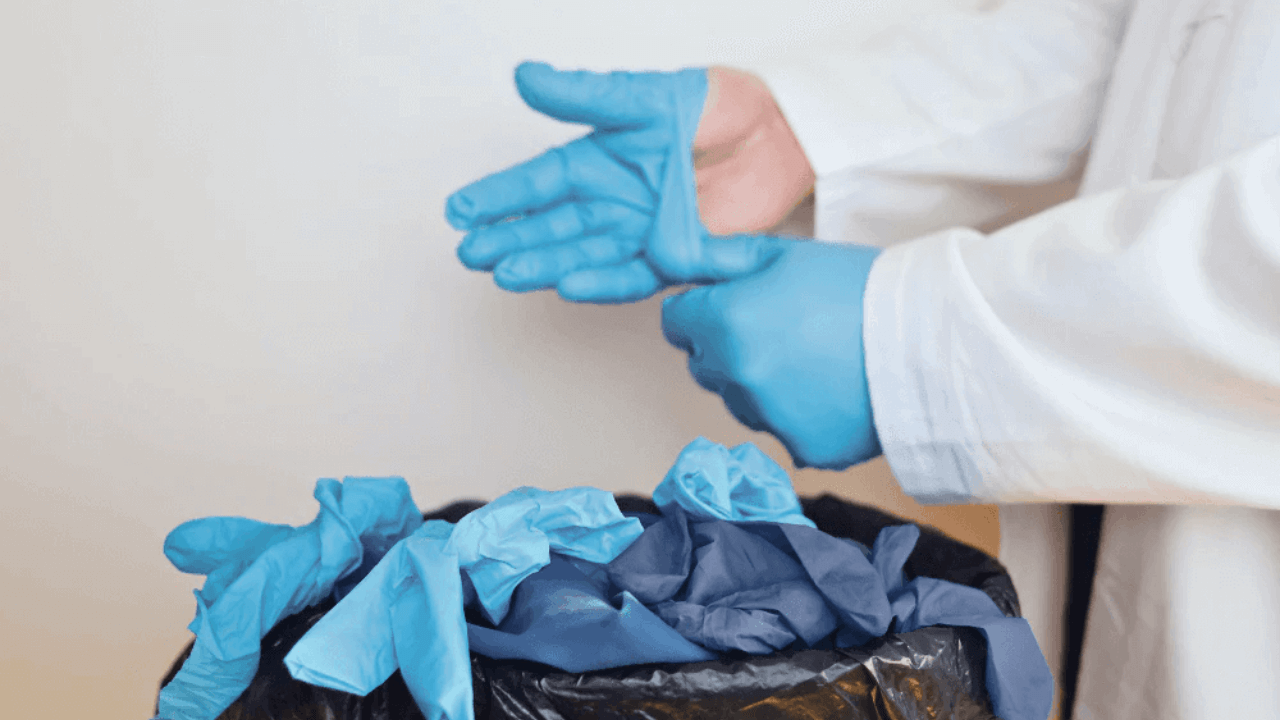
General waste bins are suitable. Gloves should be removed safely and placed directly into the bin. They should not be rinsed for recycling or composting.
Household waste systems rarely support alternative routes. Simplicity helps prevent incorrect disposal that undermines recycling streams.
Clear habits at home mirror good practice in professional settings.
Industrial and Commercial Use
In commercial kitchens, warehouses, and manufacturing sites, glove use is frequent. Switching to biodegradable options does not change disposal fundamentals.
Used gloves are entered into the general waste unless contaminated with regulated substances. Waste audits can confirm compliance and identify reduction opportunities.
Bulk users may also explore recycling partnerships. These require dedicated collection and sorting. Costs and logistics determine feasibility.
For many operations, general waste disposal remains the most workable option.
Regulatory Position
Most waste regulations focus on contamination rather than material claims. Biodegradability does not exempt gloves from waste classification rules.
Regulators typically allow biodegradable gloves in general waste. They also stress that misleading disposal, such as placing gloves in recycling, creates downstream problems.
Compliance relies on following local waste guidance and manufacturer instructions. Documentation supports audit requirements.
Clear alignment between product design and disposal pathways simplifies regulatory oversight.
Marketing Claims and Practical Reality
Marketing language often highlights environmental benefits. Practical waste management demands precision.
Biodegradable gloves offer improved end-of-life performance in a landfill. They do not transform waste systems overnight. They do not replace recycling infrastructure.
Understanding this balance helps users set realistic expectations. Environmental improvement works best when paired with responsible disposal.
Clarity protects credibility for manufacturers and confidence for buyers.
Staff Training and Communication
Where biodegradable gloves are introduced, training matters. Staff should understand that disposal rules stay largely the same.
Visual cues on bins help. Short instructions reduce mistakes. Emphasis should remain on safety and correct waste separation.
Overcomplicating disposal guidance often leads to non-compliance. Simple direction supports consistent behaviour.
Clear communication aligns sustainability goals with daily operations.
Cost and Waste Strategy
Biodegradable gloves sometimes carry a price premium. Organisations often weigh this against environmental reporting goals.
Disposal costs usually remain unchanged. General waste handling does not require new contracts or equipment.
The value lies in reduced long-term plastic persistence and alignment with sustainability targets. For many businesses, this supports broader environmental commitments.
Cost analysis should consider the full lifecycle impact rather than the purchase price alone.
Looking Forward
Material science continues to progress. Biodegradable additives improve performance under landfill conditions. Testing standards become more refined.
At the same time, waste systems evolve slowly. General waste will remain the dominant disposal route for disposable gloves for the foreseeable future.
Education bridges the gap between product innovation and user behaviour. Clear guidance supports correct disposal and environmental benefit.
Biodegradable gloves represent progress within existing waste realities.
Practical Disposal Summary
For most users, biodegradable gloves can go in the general waste. This applies to household, food service, and light industrial use.
Healthcare and hazardous environments still follow regulated waste routes. Recycling remains limited and specialised.
Reading product instructions and local waste guidance helps avoid mistakes. Disposal choices should reflect the use context and safety rules.
General waste disposal supports how biodegradable nitrile gloves are designed to break down.
The question of whether biodegradable gloves can go in the general waste has a practical answer. In most situations, they can, and they should.
This route aligns with current waste infrastructure and product testing standards. It allows gloves to reach conditions where biodegradation can occur.
Responsible use, clear disposal habits, and realistic expectations support better outcomes. Biodegradable gloves improve disposal impact without demanding complex changes from users.
Understanding how and where to discard them makes that improvement meaningful.
Upgrade your operation confidently! Our FDA-compliant biodegradable nitrile gloves deliver the protection and assurance you need to meet the highest food safety standards, all while providing a simple, positive step toward sustainability. Contact our sales team immediately for verified product certifications and bulk pricing: Call +44 7482 212945 or visit our contact page.