Nitrile gloves look simple from the outside, a box on the shelf, a color on the label, a price per case. For procurement managers handling volume orders, however, the decisions behind that purchase carry real operational weight. Color affects safety outcomes. Brand affects consistency. And in 2026, sustainability has moved from a preference to a procurement criterion.
This article addresses each consideration directly.
Color Is a Safety Variable, Not Just an Aesthetic One
Color choice in nitrile gloves carries practical consequences that extend well beyond appearance.
Black gloves remain popular in automotive, tattooing, and certain food preparation settings. The contrast looks sharp. The problem is functional. Black surfaces hide blood, chemical residue, and early signs of glove failure. In healthcare or laboratory environments, that concealment creates liability. Missing a tear or contamination trace in a patient care setting is not a minor oversight.
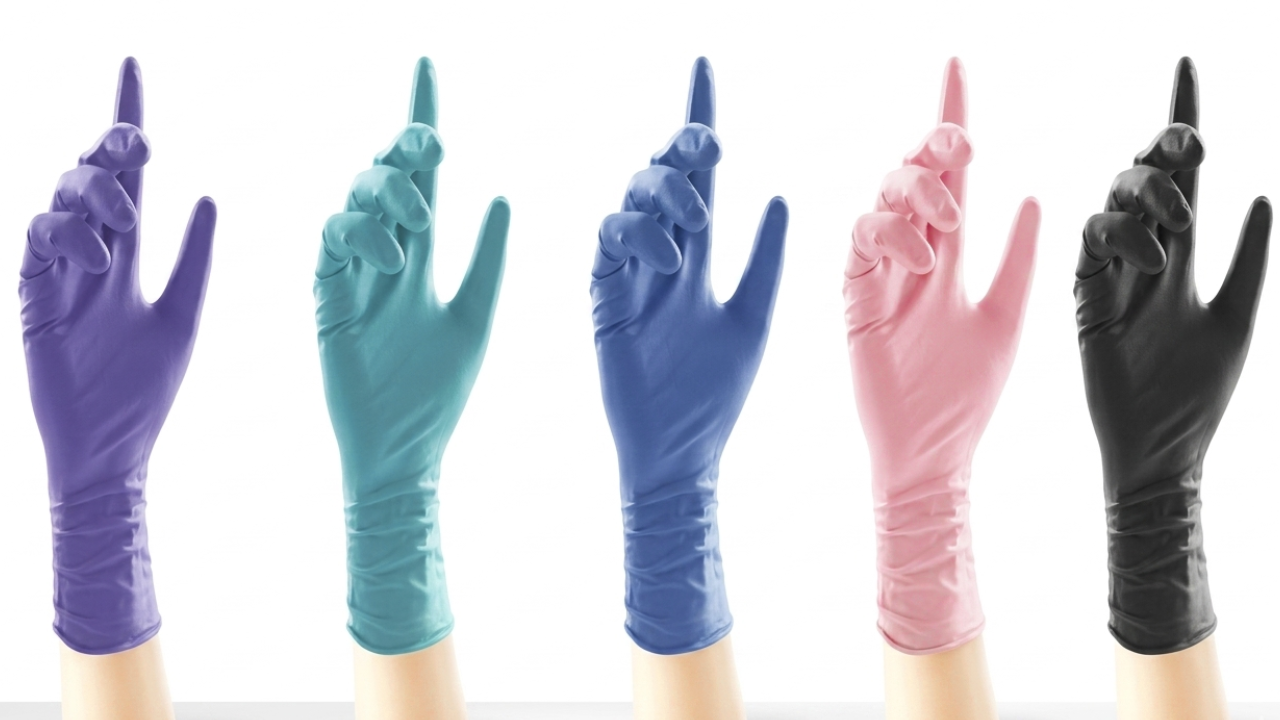
Blue, purple, and light green dominate medical and laboratory procurement for good reason. These shades make contamination visible against most work surfaces and skin tones. Purple, in particular, has earned a consistent reputation among lab buyers for combining visual clarity with a durable feel.
Color-coding by task is common in high-volume facilities. Pink for cleaning, purple for chemical handling, blue for general clinical use. This approach helps staff work more quickly and with fewer errors. The limitation is that color assignment is usually informal. It does not automatically correspond to chemical resistance data or SDS documentation. Facilities that rely on color alone, without pairing it with verified resistance specs, introduce inconsistency into an otherwise ordered system.
For bulk buyers, visibility has a direct line to compliance. A glove that shows wear and contamination clearly reduces waste, supports audit readiness, and lowers the risk of procedural errors. That connection between color and cost-per-box is one that procurement teams are increasingly tracking.
Brand Reliability Matters More Than Brand Recognition
In high-volume environments, glove performance inconsistency is a cost problem. A batch that tears prematurely, loses tactile precision mid-task, or varies in sizing between shipments forces workers to double-glove, discard more, and slow down.
Established performers like Kimberly-Clark’s Sterling Nitrile, Microflex, Halyard, and Medline purple variants have earned their positions through repeated performance in laboratory glove comparisons and industrial settings. The common thread is not marketing. It is consistent mil thickness, reliable chemical resistance, and low defect rates across large orders.
For orders in the $1M+ procurement range, supplier stability carries as much weight as product quality. Raw material volatility, tariff exposure, and supply chain disruption have all affected nitrile availability since 2021. Buyers who prioritized price alone over supplier reliability have paid for it in shortages and inconsistent AQL results.
The thickness trade-off is real. Gloves in the 7–9 mil range offer stronger protection but sacrifice some dexterity. Thinner options suit fine motor tasks but fail faster in mechanical or chemical exposure. Neither is universally better. The decision depends on the specific application and the volume of tasks requiring extended wear.
Certifications and supplier documentation remain non-negotiable at the procurement level. A supplier that cannot readily provide chemical resistance data, lot traceability, or third-party testing results is a liability risk regardless of price.
The Carcinogen Question: What the Evidence Actually Says
Acrylonitrile, a key ingredient in nitrile synthesis, was reclassified by the International Agency for Research on Cancer as a Group 1 carcinogen in 2024, linked to lung cancer risk in high occupational exposure settings. This reclassification generated attention and, predictably, buyer concern.
The distinction worth understanding is between occupational acrylonitrile exposure during manufacturing and residual levels in a finished glove. Finished nitrile gloves contain trace acrylonitrile residuals that fall substantially below established safety thresholds. No credible research connects normal glove use to cancer risk in the wearer.
There are related concerns worth acknowledging. Some nitrile formulations use chemical accelerators, including mercaptobenzothiazole, which carries its own cautionary classification in certain regulatory frameworks. In pharmaceutical or chemotherapy settings, contamination sensitivity is higher, and buyers in those verticals are justified in requesting accelerator-free options with detailed ingredient documentation.
The practical outcome of this concern is a shift in procurement behavior. Large operations are asking for more from their suppliers: third-party testing, clean formulation documentation, and transparency around manufacturing controls. The myth that standard nitrile gloves cause cancer in normal use does not hold up to scrutiny, but the demand for verified, clean manufacturing is a legitimate development. Premium suppliers who address this directly are better positioned than those who ignore it.
Why Biodegradable Nitrile Has Become the Serious Choice in 2026
Standard nitrile does not break down. Gloves discarded in landfill conditions persist for an estimated 200 years or more. For a business disposing of tens of thousands of pairs annually, that figure carries ESG reporting weight and increasing regulatory exposure as single-use plastic legislation tightens across multiple markets.
The historical objection to biodegradable nitrile was performance. Early iterations raised fair questions about whether degradation additives compromised tensile strength, chemical resistance, or barrier integrity. Testing under ASTM D5511 conditions has since answered that question. Earth Safe PPE’s biodegradable nitrile gloves break down up to 90% within 490 days under landfill conditions while matching standard nitrile in strength, stretch, and chemical protection. The degradation is driven by microbial activity and does not begin under normal storage or use conditions.
Earth Safe PPE was founded in 2023 by Peter and Jakub, professionals with combined experience spanning nearly two decades in Environmental Health and Safety and construction sales. The company operates on a straightforward premise: high-performance protection and environmental responsibility are not in conflict. That position reflects what B2B buyers are increasingly requiring rather than simply requesting.
The cost differential between standard and biodegradable nitrile exists but is narrowing. An approximate 18% premium per pair in some bulk pricing models is offset across the total cost calculation when waste disposal costs, ESG reporting requirements, and brand reputation are included. Operations directors and procurement managers running sustainability metrics have started framing this as a cost-neutral or cost-positive decision over a 12-month horizon.
Feedback from buyers in laboratory, medical, and manufacturing settings has been consistent: the gloves perform without compromise and remove a measurable waste problem from the operation. For businesses with sustainability commitments tied to corporate reporting, that combination is increasingly the deciding factor at the purchasing stage.
The objection that “green” equals weakness has not survived contact with the product. What remains is a straightforward decision about whether standard nitrile waste volume is an acceptable ongoing cost.
A Practical Framework for Procurement Decisions
Color selection should be driven by visibility requirements and existing task-coding systems, not appearance alone. Blue and purple remain the most reliable defaults for medical and laboratory settings. Black is better suited to contexts where contamination visibility is not a safety concern.
Brand selection should prioritize consistent specifications, supplier documentation, and proven performance in comparable applications. Volume orders warrant direct engagement with suppliers on AQL standards and lot traceability.
Chemical safety concerns are valid where accelerator-free or low-residual formulations are relevant to the application. The broader carcinogen narrative around finished gloves does not reflect current evidence, but demanding clean manufacturing documentation is a reasonable procurement practice.
Biodegradable nitrile addresses the waste problem directly and without performance compromise. For operations with ESG targets, regulatory exposure to single-use plastic restrictions, or sustainability reporting obligations, it is the most defensible bulk choice in 2026.
Upgrade your operation confidently! Our FDA-compliant biodegradable nitrile gloves deliver the protection and assurance you need to meet the highest food safety standards, all while providing a simple, positive step toward sustainability. Contact our sales team immediately for verified product certifications and bulk pricing: Call +44 7482 212945 or visit our contact page.